Nature Saying Hello
Dec 27, 2024
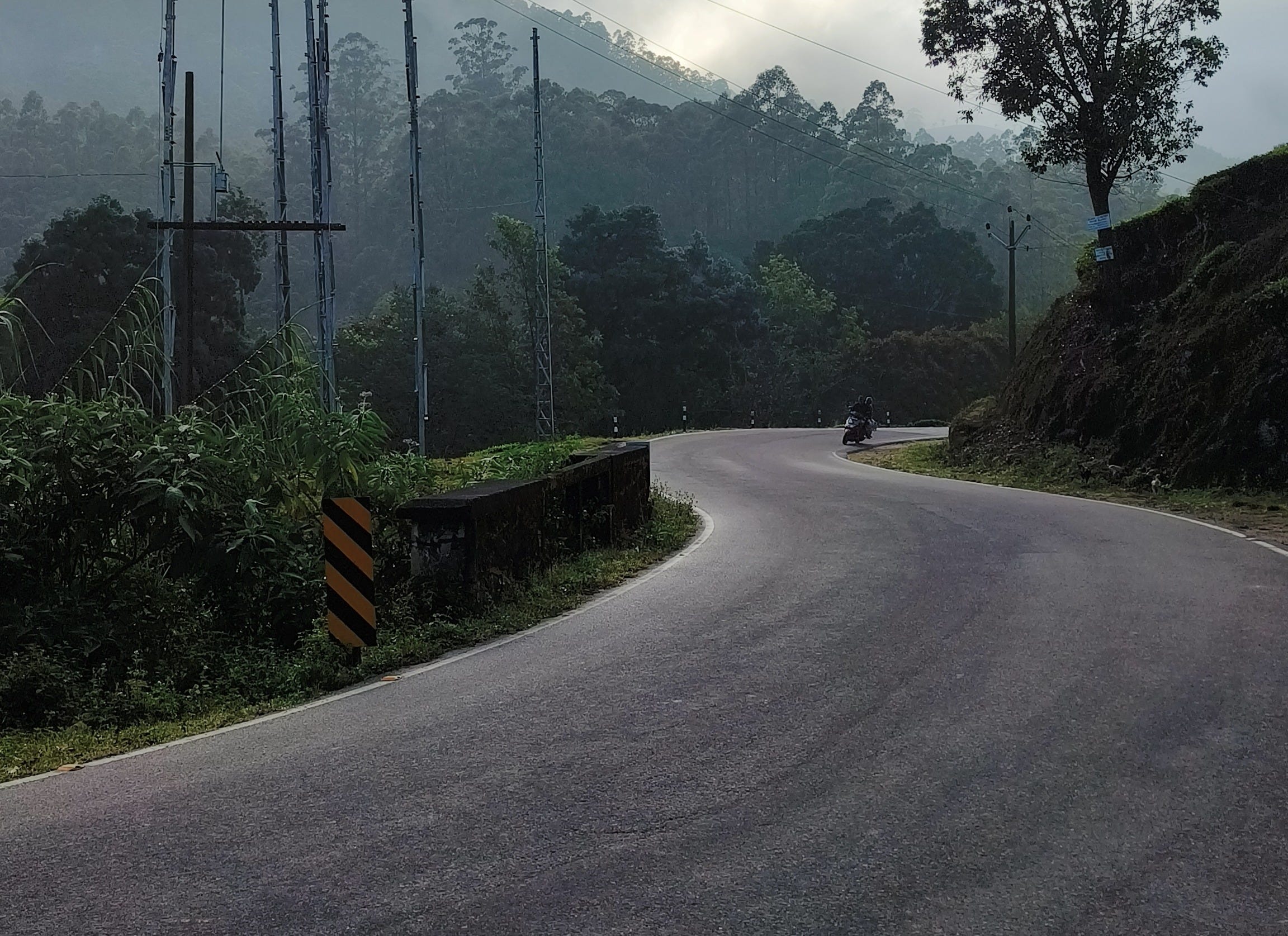
I’ve traversed some beautiful lands. Places that truly remind me of paradise lost, or found. I stopped at a small chai stall along the way to Munnar. The man who ran it was there with his father. He talked about how the region was suffering and they didn’t have any money. Even though they had a small banana plantation, he said it wasn’t enough. I told him how I found it funny that people from the city want to live in places like these and people from these places wanted money. It was the classic case of wanting what one cannot have—a cycle that’s hard to break.
The nature of our desire gives us this pull towards what we might not have and might eventually want. There is a curse in this but maybe also a small blessing: it keeps us moving. While that might hold true, it also makes us tired. The chase for desires also brings us to a situation where we must ask ourselves why we are doing what we are doing. Strange, how desire keeps us healthy can also make us sick.
It’s like these tourists in this region and others. They flock to the mountains or to beautiful regions that will accept them in hotels, guest houses and homestays. This makes the villagers wealthy and gives them much needed income for doing nothing extra except servicing these tourists. A mild means of economic health. But in these same places the tourists pollute—not only with their cars but also with their habits of littering, making loud noises in pristine natural areas and with their desire for selfies among waterfalls and viewpoints, completely robbing a place of its beauty. Once the splendour of untouched nature is gone, who is left to clean up?
Many places (in India and abroad—Mexico and Morocco come to mind) still have bottles and packaging littering the habitat. The people who run the hotels, guest houses, who profit from the tourists won’t clean it up because they’ve already got their due. The people who weren’t able to profit, whose homes lie next to the trash, where litter spoils the edges of their villages won’t clean it up either because they feel it is not their problem.
More than that, they are slighted by the slightest bit of envy at the profit of their neighbour. This small example of how economic health can also breed sickness is now emerging more and more in tourist places all over the world. The only remedy to heal these places is to leave them alone for a couple of years so they can return to their natural state—but once the tourists are gone, will they come back?
I used to balk at the tourist culture but then started to think that many tourists live for it and live by it. Better said, this is working person’s respite from the burdens of everyday capitalism. They work many hours and collect money, send their children to school and are busy most of the year. They deserve this little break. But the traffic, pollution and overcrowding shows us that we are all taking a break at the same time. This might be influenced by the fact that our overlords—the people controlling businesses in India and in the West—are enjoying their Christmas break and have given the workers here permission to do the same.
Eventually, everybody serves somebody. But it is still this tourist trap I wonder about. A small elephant sanctuary lies an hour from me. Should I go there? Do I need to go there? What will I gain by going there, seeing it and then coming back? It seems like an option for those people who do not know what to do. The ceaseless movement and distraction a tourist needs is something I cannot really get behind. I need moments of stillness and today, with its slow and calm movements, has been a blessing.

I am listening to the birds outside my window as they flitter in their habitat from tree to tree. Some birds’ calls get louder as they choose to sit on the tree close to my window and at times others do the same. I wonder about their lives too, do they wish to be tourists? Or do they simply travel to change their climate to something more suitable. Do they migrate because they have to or because they can?
Their calm and rhythmic chirps and sounds give me a sense of peace that goes deep within me. Each bird has a different chirp and their melodies can even tell us which species they are. Each way of talking is a different species altogether and it made me think of how humans are the same. Each accent among humans speaks of a different culture. While all birds are birds and belong to the class of avians, all humans are also humans belonging to the class of homo sapiens. But in that, we humans express a remarkable diversity that is similarly reflected in different species of birds.
While birds colour themselves and show off different tails to distinguish species—humans colour themselves on the inside with different beliefs. We have metaphorical ‘tails’ which are extensions of the kind of culture we have grown up in and decided to follow. A European human has many different cultural species. Collectively, they differ from Americans and—upon closer observation— within Europe, they differ from each other too.
The same can be said of Africans or Indians, the one’s from the south are wildly different from the north, and different from the ones in the East and West. Like birds, some humans migrate and some don’t. Like birds we speak in a different pitch and make different sounds to convey meaning. Some of us can understand each other and while others can’t.
My guess is birds don’t do the tourist thing because they don’t need to escape anything. At least, not like we do. They are content in their habitats and limit themselves to where they can find shelter and food. With human activity destroying their habitats, they are forced to move.
Humans are also forced to move when capitalism (for example) destroys the natural habitats upon which their ancestors once built their lives. Farmland makes way for hotels, jungles become resorts and villages turn into homestays. The desire for money and economic prosperity makes us treat the limited natural resources we have as things to be used for gain. We lose respect for all that gives us life and start thinking money will do it all. But when the last tree has fallen and all the rivers are poison, we’ll realise we can’t eat money. (Thanks Aurora)
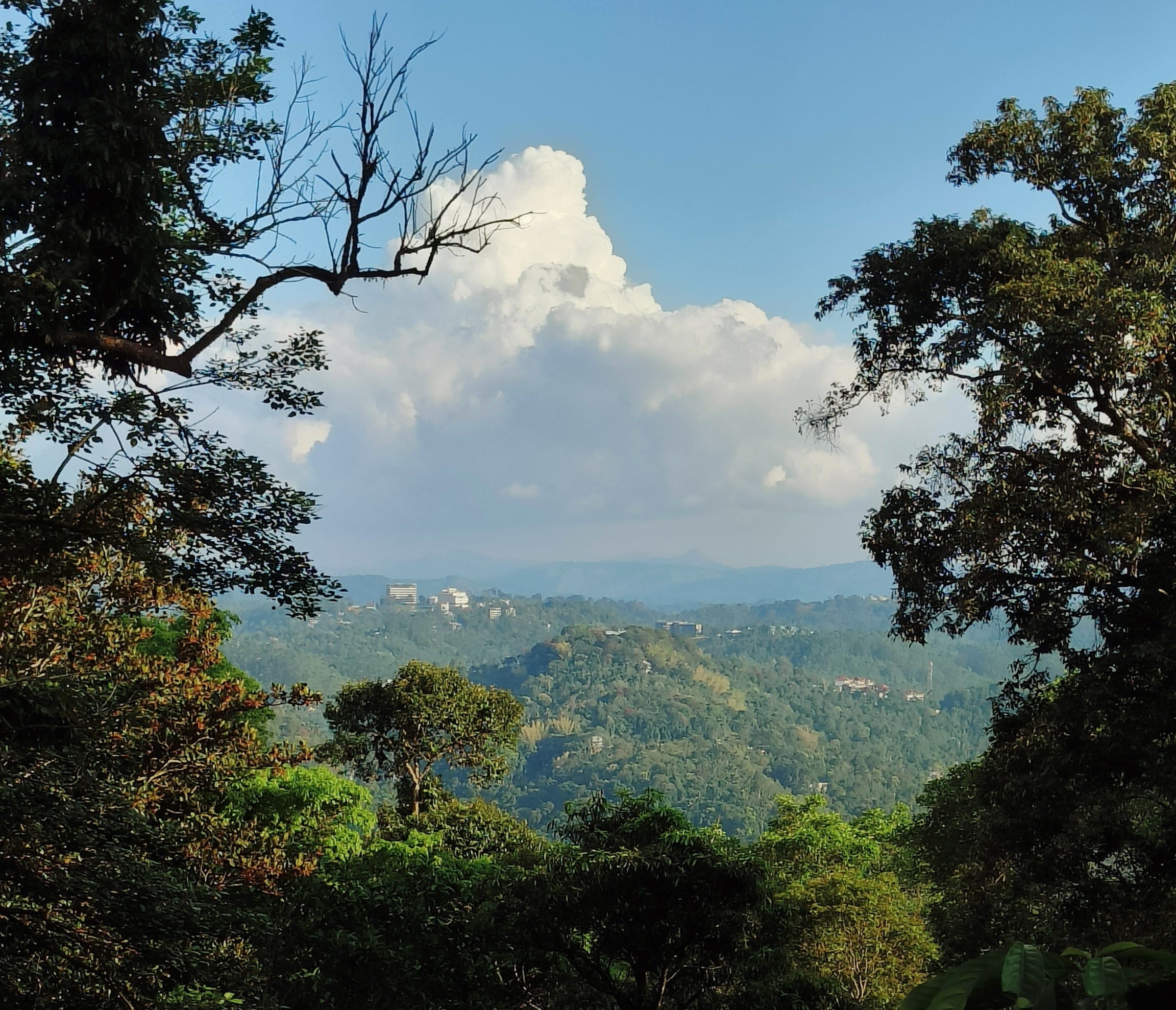
I wonder how birds think of ‘respect for the environment’. Are they simply not powerful enough to make enough of a change in their environment? Are their activities not enough to damage it? From bird poo being a fertiliser, to their diet of insects and the pollination they do—their presence in nature is a balancing act. So I wonder if they even need the concept of respect at all. They are so intimately bound to the plants and trees they live among that they are acutely aware of their own interdependence.
Why does humankind not have this reverence? Why are we not in love with nature? Why are we blinded? Is it media, commercialism and advertising that’s making us blind? Or is there something else…something deeper. When I am tired of society and this incessant rat-race, looking at a tree gives me peace. Better yet, looking at a tree reminds me of the peace that already exists inside me. Is our culture not reminding us that nature exists within us? Do we not get an education in the ways trees transport nutrients from their roots to their branches and leaves? Is our complex network of veins and arteries not similar to the xylem and phloem of trees—just a different expression of different species?
If we really zoom out, we can see all of nature as one distributed into different species. We know this from our biology that all of nature is divided into five classes: animal, plant, fungi, protist, and monera. The last two being types of single and multi-celled bacteria that we find everywhere in nature, especially in our own bodies creating a dynamic mix between health and sickness. Somewhere in our human desire to dominate, we have moved from trying to dominate our fellow animal species (that includes humans) to trying to dominate the plant and fungi kingdoms as well. I truly wonder if we ever considered ourselves the same as all these other classes of being? I wonder if we felt similar and somehow related to them—would we still carry on like this?
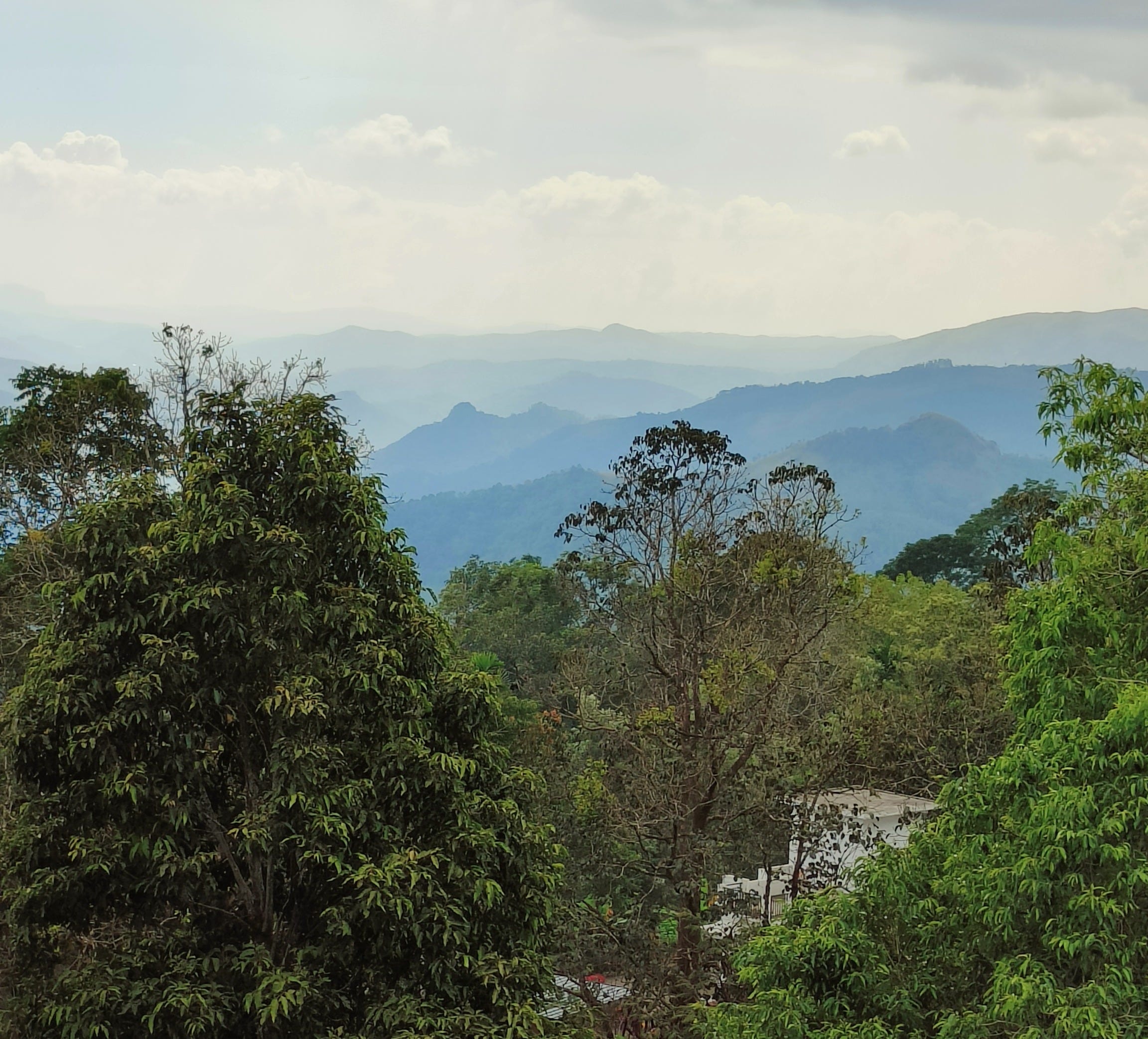
I am still looking out the window. The trees have some leaves that are yellow and some that are healthy and green. Occasionally, one falls and makes no sound as it hits the ground. One of the trees has large red flowers at the ends of its branches. The branches with the flowers look like the most delicate ones, a poignant reminder of the gentleness of beauty.
I cannot see any human traits in the tree and I cannot make myself believe that I am like it or it is like me. But then a gust of wind blows. The small plants below, their large tropical leaves start moving back and forth. The leaves of the tree also start moving back and forth, fluttering in the wind. I cannot help but see this grand movement as a wave from the plant kingdom to me. A greeting in unison, orchestrated by the wind towards me and anyone that can see. They’re saying hello to me and I cannot help but feel grief—for all that my species has done.
I cannot help but feel sad, for I have no way of saying “I’m sorry.”