
The Self Obsessed Society
This essay takes the work of two philosophers at the heart of modern critique. Byung-Chul Han and Slavoj Žižek’s work has shown us ways in which society has masked its problems by a show of shiny veneer that seems attractive but has been sweeping the problems under the social media rug.
If we look at an Instagram influencer’s stories and it is always something that makes them look beautiful and attractive. However, I have met some influencers (and the aspiring ones), and while they are beautiful, they are also normal. It is this self-obsessive tendency I see expressed everywhere in society and the monkeys that we are, we naturally want to imitate this.
We’re all worshipping at the altar of ourselves. Ridiculously trying to make our place in this world that continues to make us feel insignificant. Somehow the obsession with our own images is the new kind of religion.
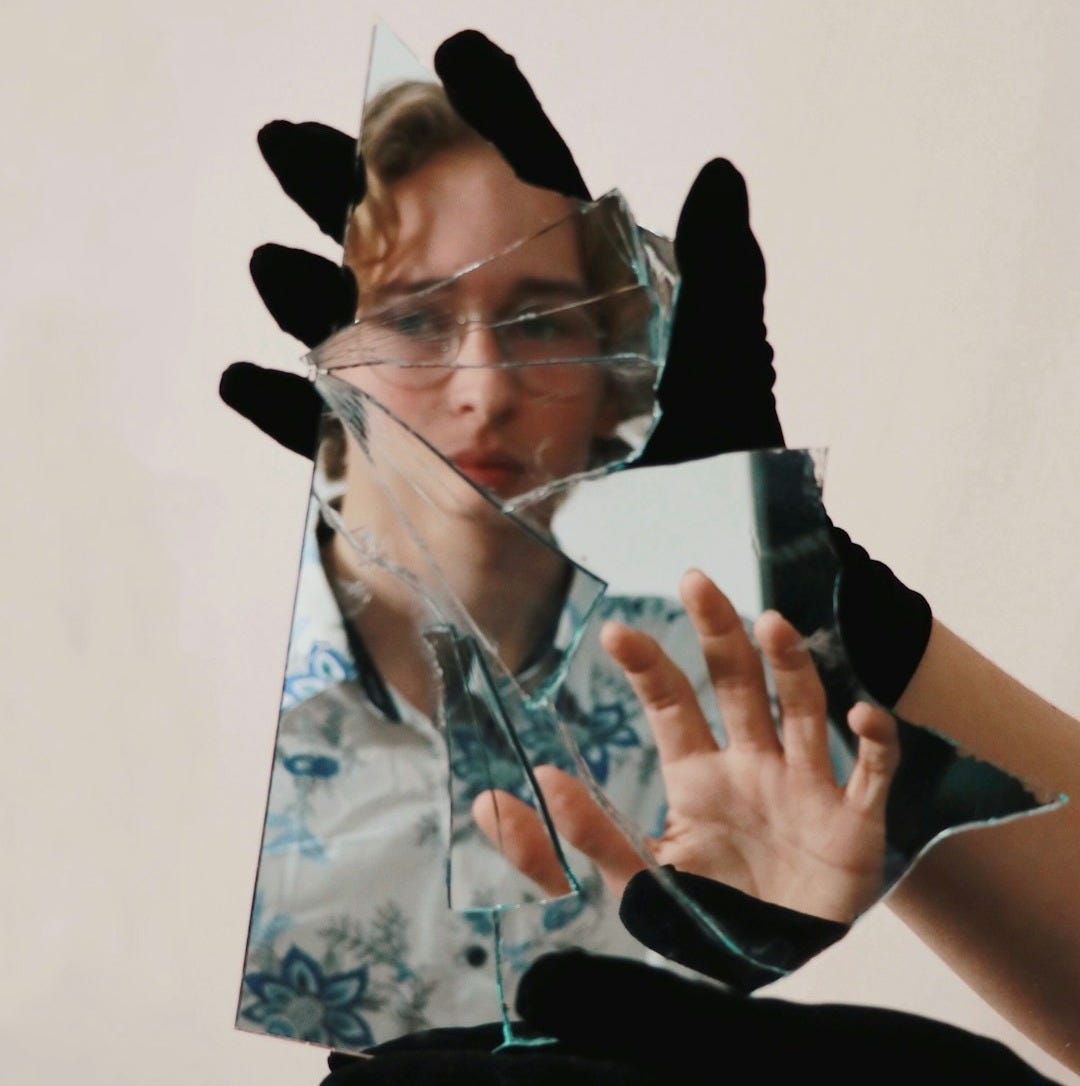
This digital self-worship eerily mirrors what Jacques Lacan called the mirror stage. It’s that crucial moment when an infant first recognizes their reflection and simultaneously experiences joy and alienation. Like that child, we fall in love with an image that feels more complete than how we feel inside, more perfect than our actual experience of ourselves. But unlike the infant’s mirror stage, which occurs once, social media traps us in an endless loop of mirror stages, each reflection promising a more perfect version of ourselves. We become perpetual infants, constantly reaching for an impossible wholeness, lost in our imagination.
This new religion operates through a digital realm where exposure becomes sacred and privacy profane. In our society, your value is not measured by inner worth but by visibility, by the degree to which one can be seen, liked, and followed. The digital age has transformed the traditional religious impulse into a compulsive need for self-display.
Photo by Joeyy Lee on Unsplash
The Performance: A Cracked Mirror
Slavoj Žižek’s concept of interpassivity helps explain this phenomenon. We don’t merely imitate what we see; we outsource our very being to our digital avatars. Our online profiles ‘enjoy’ life for us, ‘live’ for us, while we exhaust ourselves maintaining these idealized versions of ourselves. The result is a peculiar form of alienation where we become spectators of our own performed happiness.
How has it come to be that we have lost this ability to perceive the viewpoints and needs of others? How come we have become mindlessly absorbed in the sole viewpoint we have available to us? Are we simply sightseeing in our landscape alone? Are we the God whose temple we are worshipping at?
The tyranny and dictatorship of our micromanaged selves reeks of bad breath and outdated morals. We have become the victims of our own success and forgotten what imperfect beings we were that made that success happen. But right now, it’s not even that we’re the most important person in our universe, it is that we’re the only person in our universe.
Imagine a hall of mirrors where each reflection must be more perfect than the last. This is what Žižek calls spiritual capitalism – where self-improvement becomes not just a pursuit but an obligation. We’re no longer told simply to succeed; we must transform our very being into a project of endless optimization. Like a snake eating its own tail, we consume ourselves in the process of trying to become our ideal selves.
Post-modern society specifically creates this kind of person with the proliferation of memes, perfect ideas and unreachable ideals—there is so much success and perfection intrinsically demanded of us that we feel like failures from the very start. Nowhere is this most prominent than with Gen Z and younger. To counter this difficult feeling, they have from a young age decided to play the game in an underhanded way. Fake it till you make it, they decided inside themselves and casually forgot in due time that they were playing the game.
This forgetting is what Žižek calls ideological cynicism – a state where we know very well what we’re doing, yet we do it anyway. The young generation’s relationship with social media perfectly exemplifies this: they’re often the first to criticize its artificiality, to mock its conventions, to expose its fraudulent nature—yet they continue to participate with increasing intensity. The traditional wisdom of ‘know thyself’ has transformed into create thyself, as we perform our authenticity for an audience we’ve internalized so deeply we no longer recognize its presence. The pretence of ‘faking it’ initially serves as a psychological shield, but gradually, the performance becomes more real than the reality it was meant to imitate. We find ourselves trapped in a cycle where our awareness of the game’s artificial nature doesn’t free us from playing it but rather makes us play it more perfectly.
What makes this particularly insidious is how our culture of digital exposure creates a paradoxical form of intimacy. We share more than ever before, eliminating every shadow and mystery from our lives, yet feel increasingly isolated. This compulsive need for transparency doesn’t just affect what we share; it reshapes how we experience ourselves. The younger generation hasn’t merely adapted to this contradiction; they’ve internalized it. Their performance isn’t just a mask they wear; it’s becoming their skin.
The social media landscape has become our new symbolic order, complete with its own unwritten rules, rituals, and demands for performance. We don’t just perform for our followers; we perform for an internalized audience that shapes our every post, every photo, every carefully crafted caption. Our digital avatars both reflect and construct our reality, making it increasingly difficult to distinguish between the authentic self and the curated one.

The Trap
This crisis of authenticity isn’t limited to digital natives. Those who came of age before social media find themselves caught in a different but equally compelling performance. The older generation that has not had success, and often been sidelined during their lives, is also waking up to this promise of endless attention. Having witnessed the apparent success of digital self-creation from the outside, they too are being seduced by its false promises.
The dominating views of our older generations, that influenced millennials while growing up, stand in stark contrast to the society today. While our parents’ generation fought tangible struggles—improving living conditions, building better systems, creating material progress—we inhabit their upgraded world. The old narrative of constant progress has shattered. Yet despite having no clear target for improvement, the younger generation faces relentless pressure to upgrade something, anything. The motivation isn’t there but the demands to the younger generation is still there. So what are they supposed to improve? What are they supposed to upgrade? What are they supposed to perfect?
Well, themselves of course. It is the only thing in their environment that is still imperfect. But a living being cannot upgrade that same living being. A knife cannot cut itself, a hammer cannot mend itself. So there is an inherent futility in this chase. Gen Z knows how pointless this is but they also know society won’t stop demanding it from them. Even if their parents don’t care, their friends care, their relatives care, their teachers care. So they put on a perfect face—and somehow they end up falling in love with it.
Our human desire to make ourselves better is a natural part of growth and progressing as a human being. But should we confuse this natural tendency with the capitalistic tendency for eternal progress then we can’t stop making ourselves better—this becomes a sickness.
We start loving our idealised version and that’s not who we really are. We don’t love our imperfect, trauma ridden and insecure self. That self is not only hidden from the world but also a self we’re desperately trying to escape from. We start believing, falsely, that if we keep up this charade of progress and perfection that we’ll somehow become that person we can finally love.
In this context, Žižek’s critique of Western Buddhism and mindfulness culture becomes particularly relevant. What appears as an escape from the rat race of self-optimization is often just another form of ideological manipulation. As he argues, these practices often serve as the perfect spiritual supplement to neoliberal self-exploitation, helping us to ‘better cope’ with our alienation rather than addressing its root causes.
The older generation that has not had success and often been sidelined is also waking up now to this idea that they can have it all. They are obsessed with their own progress and making a project not only of themselves but also of their surroundings. They now desperately crave what others around them had—power, success, status. So their idealised image is based off the perfection they were told to chase in their generation. Instead of enjoying their old age, or their circumstances, they find themselves dissatisfied with everything because something in them calls for more.
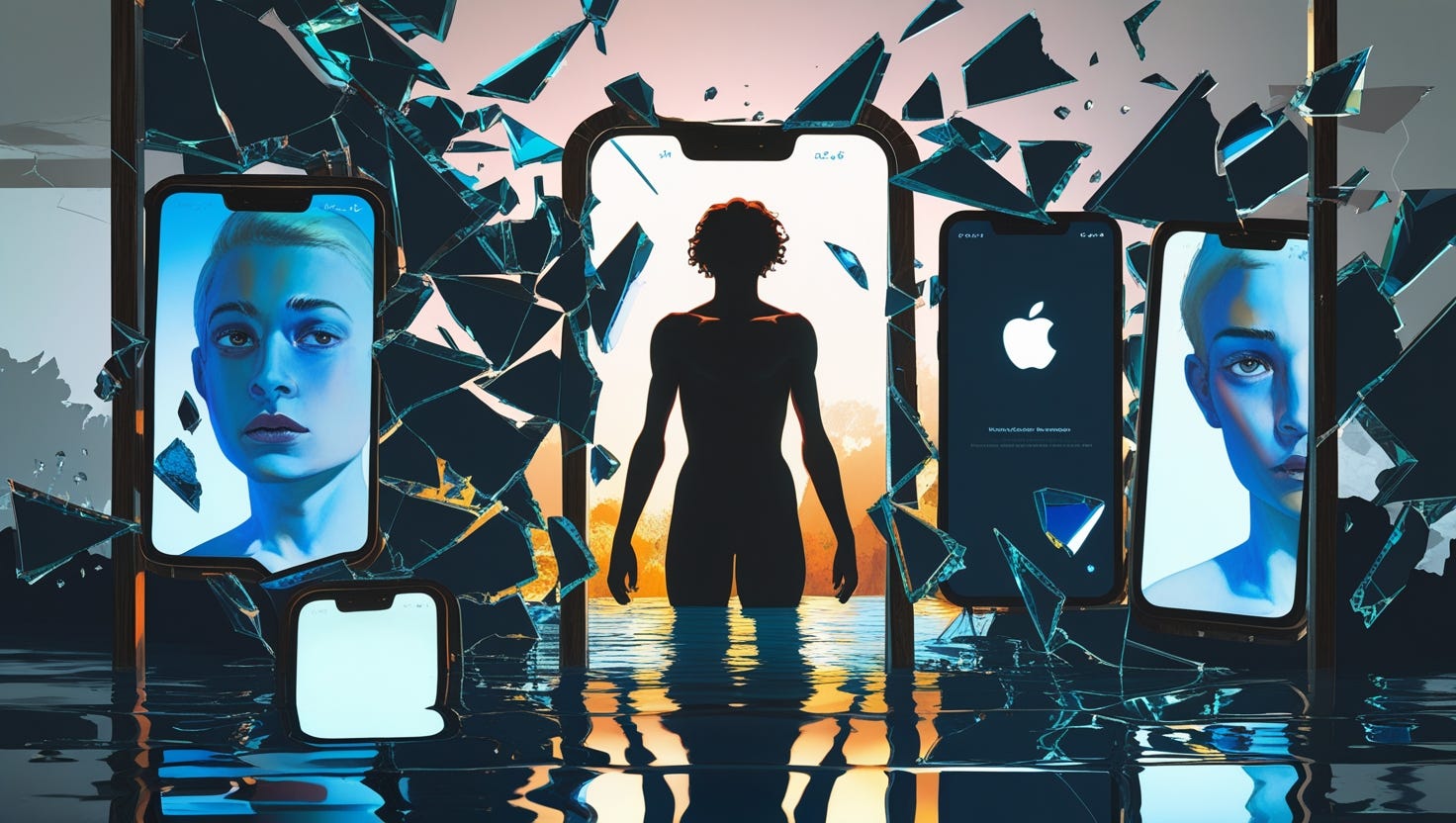
Breaking Free
In the end, no one wins. We’re all failures to ourselves because we’ve failed to accept ourselves as we are. No flower is perfect and there is no idealised image in nature. Nature with its imperfections is the perfect image of living in the natural world. Nothing in nature is envious of the other, but we are. Driven by the envy we callously call desire, we’re fighting ourselves to become anything other than ourselves.
What does it look like to embrace imperfection? It might involve a little rebellion but not on the outside but inside ourselves. There is a demand we’ve internalised and that we’re acting from. We have to fight that. Eventually, society will ask us to be a certain way and we have to remember that we can choose to agree to decline politely. That’s the only way change will happen, otherwise this sickness will simply take another form in the coming generations. So it is less a question of perfection but of health.
This is where Žižek’s concept of traversing the fantasy becomes crucial. It’s not enough to simply recognize our self-imposed prison of perfectionism, we must go through the painful process of dismantling it. This means confronting not just our own illusions, but the very structure that makes these illusions seem necessary. As Žižek puts it, “Freedom hurts. Less than the hurt that comes from remaining caught in the fantasy, but it hurts nevertheless.” The real act of rebellion isn’t in creating a better version of ourselves, but in accepting that there is no perfect version to attain.
We have a choice, whether to perpetuate health or perpetuate sickness. But this choice isn’t as simple as choosing between perfection and imperfection. Like the infant in Lacan’s mirror stage, we must learn to reconcile our fragmented reality with our idealized image. Yet unlike that infant, we can choose to step away from the mirror. We must go toward what Žižek calls the courage of hopelessness – the willingness to abandon our fantasies of perfect self-realization and face the void they were covering up. Only then, paradoxically, might we find genuine freedom in the imperfection we’ve been running from all along.
This is perhaps the most radical act available to us in our transparency society: not the endless pursuit of self-improvement, but the courage to embrace our inherent incompleteness. To find freedom not in the reflection, but in the spaces between reflections, in the shadows our society so desperately tries to eliminate. The question isn’t whether we’ll choose perfection or imperfection, but whether we’re brave enough to shatter the mirror altogether.